Calm Activities That Help Kids Focus Without a Screen
Parenting through screen withdrawal is not pretty. The tablet comes away and the crying starts. The TV goes off and suddenly your child has no idea what their hands are for. You reach for calm and find chaos instead. But here is the thing: kids are not bad at entertaining themselves. They are just out of practice. With a little structure and the right low-tech activities, children can learn to focus, stay genuinely engaged, and actually enjoy the quiet.
Quiet Time at a Glance
Children build genuine focus through hands-on, low-stimulation activities, not passive entertainment. This article walks through a simple progression of screen-free ideas, starting with sensory play for toddlers and moving toward logic-based challenges for school-age children. Each activity is chosen for its ability to build concentration and patience with minimal setup, no batteries, and absolutely no Wi-Fi required.
Why Screen-Free Time Is Worth the Effort
Screens do one thing exceptionally well: they hold a child’s attention. But they do it by doing all the work. Colours change, characters speak, and sounds cue the next moment. The child’s brain just receives. It never has to generate its own focus or push through boredom to find engagement.
Low-tech activities are different. When a child sits with a lump of playdough or a half-finished jigsaw puzzle, the brain must do the heavy lifting. It has to notice, decide, and persist. Research on children’s developmental milestones reinforces what many parents sense instinctively: children who regularly engage in self-directed, low-stimulation play develop stronger attention and self-regulation over time.
That pays off in school. It pays off socially. It pays off in every moment your child needs to sit with something hard before the answer comes.
Sensory Play for Toddlers Who Are Learning to Settle
Toddlers are not built for stillness. Their developmental job is to touch, pour, squish, and experiment. Before you can ask a two-year-old to sit quietly with a task, you need to give them something that satisfies that physical drive to interact with the world.
Sensory play does exactly that. A plastic bin filled with dry rice and a few cups and spoons can hold a toddler’s attention for fifteen to twenty minutes. Playdough with simple tools like a butter knife or fork becomes a full sensory experience. A small tray of sand or cornmeal lets a child trace patterns with their finger and erase them, again and again.
The key is that these activities have no end point. There is no winning or finishing. That teaches something valuable: the process itself is the point. Over time, toddlers who play this way develop the ability to stay with something even when it does not deliver an instant reward.
Keep sessions short, around ten to fifteen minutes. Make clean-up part of the activity by handing them a small dustpan and brush. It extends the engagement and builds a sense of ownership over the space.
Creative Activities for Preschoolers That Stretch Patience
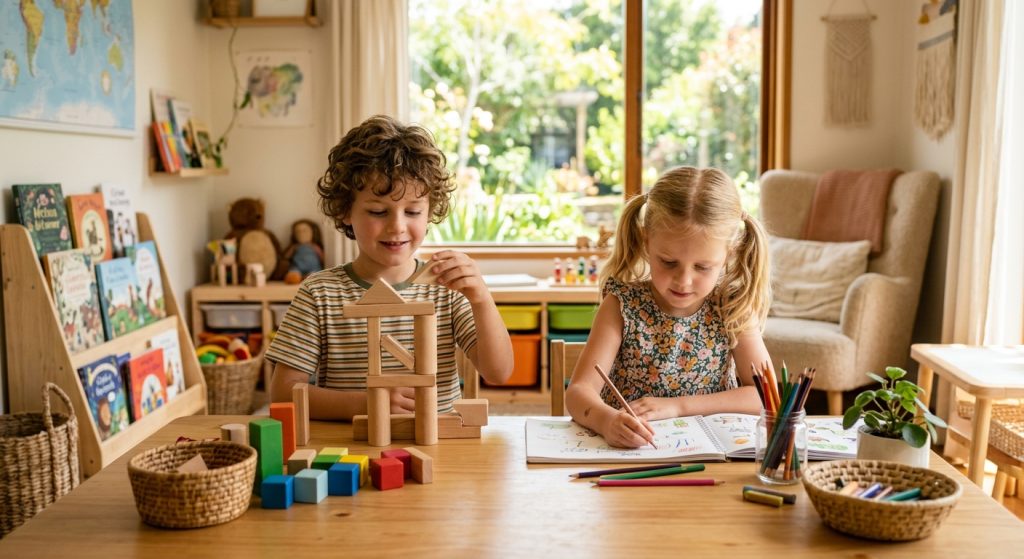
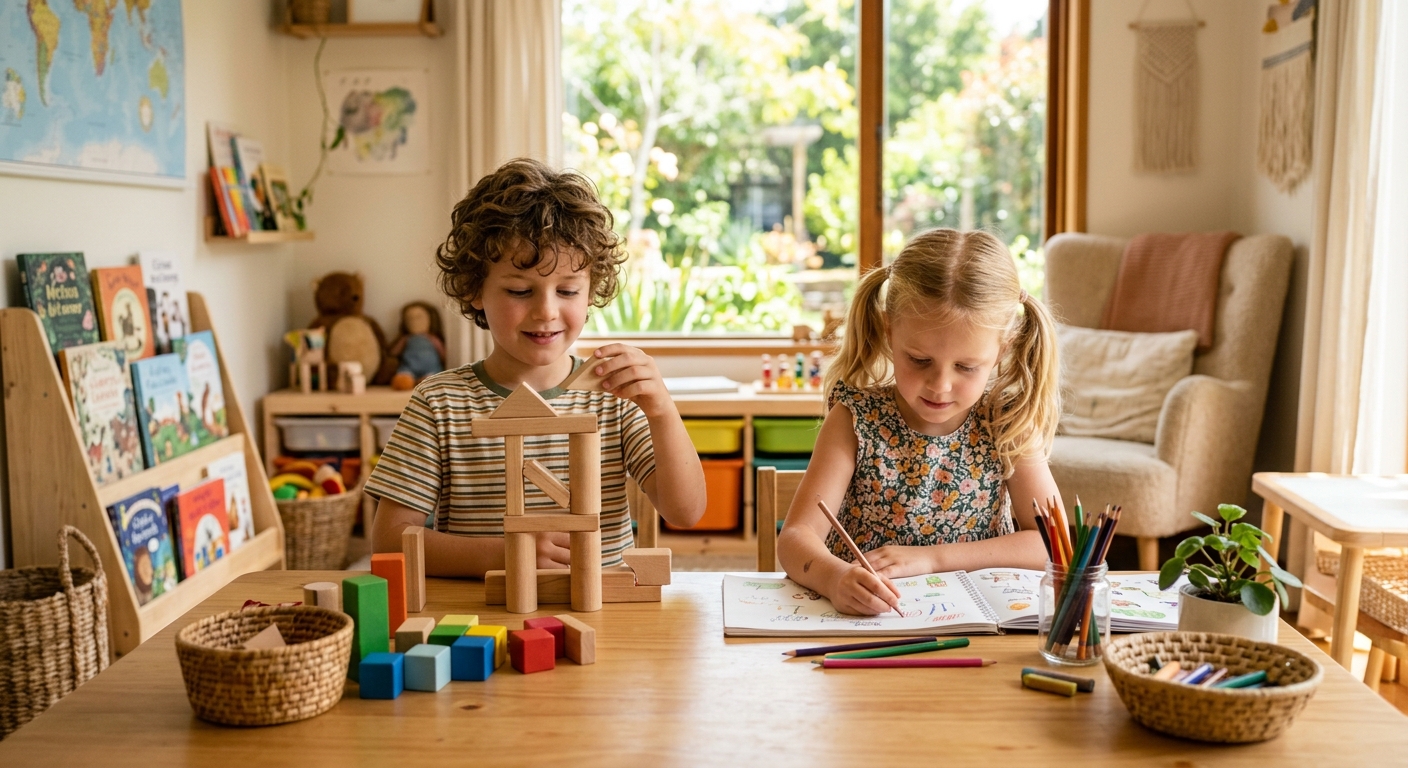
By age three or four, children are ready for more structured play that has a loose goal attached. This is the age where drawing, building, and imaginative play start to last longer, as long as you give them space and do not interrupt too often.
Sticker activity books are surprisingly effective at this stage. They require hand control and decision-making, and keep a child occupied without any external input once they are set up. Simple dot-to-dot sheets add a light counting element. Neither needs explanation or assistance after the first minute.
Block building is worth prioritising here. A basic set of wooden unit blocks offers an almost endless challenge. When a tower falls, the child learns to regulate frustration and try again. That cycle of attempt, failure, and retry is one of the most important focus-building sequences a young child can experience. Resist the urge to fix it for them. The struggle is the whole point.
Engaging Activities for School-Age Children Ready for a Challenge
Around age five or six, children develop a new cognitive ability: they can hold a goal in mind while working toward it step by step. This is the stage for puzzles, patterns, and simple logic challenges that reward persistence over speed.
Jigsaw puzzles are a well-worn classic for a reason. They require visual planning, patience, and a strategy for approaching a problem. Starting with the edges, sorting by colour, and fitting pieces together one by one builds methodical thinking without a single worksheet in sight.
Pattern activities also shine at this age. Bead threading, lacing cards, and tangram sets give children a quiet challenge that becomes almost meditative once they settle in. There is no right answer to get wrong. There is only the pattern and the effort to complete it.
Where Number Puzzles Fit Naturally at This Age
Children who are comfortable with numbers and ready for a logical challenge take naturally to number placement puzzles. Mini Sudoku uses a compact 4×4 or 6×6 grid instead of the full 9×9 format, which makes it far less daunting for a child trying it for the first time. The rules are simple: no number can repeat in a row, a column, or a box. No reading required. No tutorial to sit through. Just a grid, a pencil, and some quiet thinking.
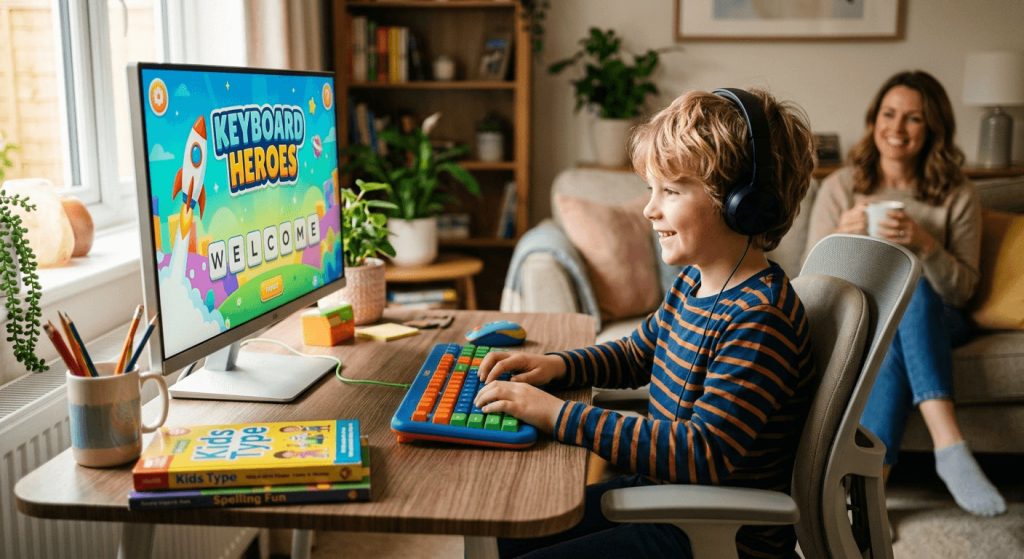
You can print sheets ahead of time for a fully screen-free version, or load a browser-based version and hand over a device just for that purpose. Either way, the child is actively problem-solving rather than watching. That distinction matters a great deal. Active thinking builds focus. Passive watching does not.
Activities Worth Keeping on Your Quiet-Time Rotation
A good quiet-time toolkit does not need to be large. It just needs enough variety that nothing becomes too familiar too fast. Here are options that hold up across repeated use without getting stale:
- Playdough sculpting with loose parts such as craft sticks, googly eyes, and pipe cleaners
- Jigsaw puzzles chosen at a level slightly harder than comfortable
- Origami with beginner-friendly folds, particularly suited to ages seven and up
- Printed or browser-based number grids and logic puzzles requiring no setup
- Bead threading or simple weaving on a small loom card
- Journal prompts written on index cards for children who lean toward writing and storytelling
Rotate the options regularly. A puzzle the child has already finished goes back in the box for a month, then comes out again like something almost new. Familiarity is the enemy of engagement at this age.
Screen-Free Activities Compared by Age Group and Skill
| Activity | Best Age Range | Focus Skill Built | Setup Required |
|---|---|---|---|
| Sensory bins (rice, sand, water) | 1 to 3 years | Sustained attention | Low |
| Playdough with tools | 2 to 5 years | Fine motor, patience | Low |
| Block building | 2 to 6 years | Frustration tolerance, planning | None |
| Jigsaw puzzles | 4 to 9 years | Visual planning, persistence | Medium |
| Mini Sudoku and number grids | 5 to 11 years | Logical reasoning, number sense | None |
| Origami | 6 to 12 years | Spatial reasoning, sequencing | Low |
| Journal prompts | 7 years and up | Creative thinking, expression | None |
Building a Quiet-Time Routine That Actually Holds
The biggest mistake parents make with quiet time is treating it as a one-off experiment. A child who has never had structured, screen-free time will resist it at first. That resistance is normal. The goal is repetition until it becomes expected, then comfortable, then something a child can drop into on their own.
Pick a consistent trigger time. After lunch is a natural fit because the body slows slightly after eating. Quiet time after school works as a decompression buffer before the dinner rush. The timing matters less than the consistency. Do it at the same point each day and it becomes part of the rhythm.
Give a two-minute warning before it starts, just as you might before turning off a programme. This helps a child transition rather than feeling ambushed by the change. A predictable cue removes a lot of the friction.
Keep the materials visible and accessible. A small basket on the kitchen table or a low shelf within reach signals that quiet time is normal, not a punishment. If the materials are stored in a cupboard, the whole thing feels like a chore before it even begins.
Stay hands-off once the activity starts. This is harder than it sounds. When a child struggles, the instinct is to step in with guidance or encouragement. Hold back. Let them sit with the difficulty. That is precisely where the focus-building happens, in the gap between confusion and figuring it out.
Start with ten minutes. Build gradually to twenty or thirty over a few weeks. Celebrate the effort, not just the outcome. A child who spent fifteen minutes on a hard puzzle without finishing it has done exactly the right thing.
The Quiet Payoff That Grows with Your Child
None of this happens overnight. The first week of screen-free quiet time might produce more complaints than concentration. That is a stage, not a failure. Push through it gently and consistently.
What shifts gradually is the child’s relationship with effort itself. A child who spends regular time on hands-on, low-tech challenges stops expecting instant payoff. They start to trust that sticking with something actually works. That trust is the foundation of genuine focus, and it carries far beyond quiet time.
It shows up in homework, in friendships, in moments that require a child to wait and think before acting. The habits formed during a calm twenty-minute session with a puzzle or a grid of numbers quietly shape how a child approaches hard things throughout their whole school journey.
Screens will always be part of life. The ability to focus without one, built slowly and patiently through activities like these, is a skill worth protecting from the start.