Screen-Free Nights That Kids Actually Look Forward To
The look on a child’s face when you announce “no screens tonight” can go from mild grumbling to a full-on protest. Most parents have been there. You want a meaningful family evening, but the pushback feels exhausting before anything has started. What if that reaction could change? Not through arguments or stand-offs, but by building something your kids genuinely want to be part of.
Key Points
- Matching activities to your child’s age group keeps engagement genuine, not forced
- Setting expectations the day before avoids last-minute meltdowns at screen-off time
- A dedicated activity corner at home removes the “there is nothing to do” excuse
- Consistency over several weeks is what turns a one-off into a real weekly routine
- Ready-made activity collections make getting started simple without sourcing every item yourself
Why Evening Screens Are Such a Hard Habit to Break
Kids are not glued to screens because they are ungrateful or difficult. Screens are genuinely rewarding on a neurological level. The fast-paced stimulation from a tablet or streaming show triggers dopamine responses that make quieter activities feel flat by comparison. This is backed up by children’s media research from the American Academy of Pediatrics, which has consistently found that passive evening screen use can disrupt sleep and crowd out time spent on creative, social, and physical activity.
When you remove something that rewarding without replacing it, the brain feels the gap. That is why blanket bans rarely hold. The goal is not to take something away. It is to offer something that carries its own sense of satisfaction. That one shift in framing changes how you approach the whole evening.
Setting Expectations Before the Night Arrives
The most common mistake parents make with unplugged nights is announcing them the moment kids are already deep into a show or game. That feels like a rug pull, and of course there is pushback. The real preparation happens earlier in the day, or even the day before.
Mention the upcoming screen-free evening during a calm moment. Breakfast is ideal. Something short and neutral, like “Friday night we are doing a games night, no tablets or TV,” is all you need. No lengthy justification, no big announcement. When children have time to mentally adjust, they arrive at the evening with far less resistance. Some even start thinking about what they want to play before the night rolls around.
Framing matters too. The evening should feel like something added to the week, not something taken from it. Letting kids have some input on the activity makes a genuine difference. Asking “Do you want to do a puzzle or bake something together?” gives them a sense of ownership. Children who feel in control rarely fight the plan.
Picking Activities That Match Your Child’s Age
Younger Children, Ages Four to Seven
This age group does best with physical play and simple creativity. Playdough, finger painting, building blocks, and easy board games are reliable choices. Reading aloud together is another strong option because young children still love being read to, even when they can read independently. Keep the activity window shorter, around forty-five minutes, and do not push things if energy starts to fade. At this age, the connection matters more than the specific activity you choose.
Older Kids, Ages Eight to Twelve
Children in this group want to feel capable and genuinely challenged. Strategy-based board games, craft kits, cooking simple recipes together, and scavenger hunts all work well here. Jigsaw puzzles are underrated for this age. They take time, feel satisfying, and naturally invite conversation without anyone having to force it. Multi-week projects are especially effective. Building something from a kit, creating a family scrapbook, or starting a small indoor garden gives every unplugged night a clear sense of purpose and continuity.
Teens, Ages Thirteen and Up
Teens are often the trickiest because they tend to read structured family activities as awkward. The key is avoiding anything that feels childish or obligatory. Card games with real strategy, trivia nights, cooking a new recipe together, or simply sharing the same room with music playing while everyone reads or draws can all work. Teens sometimes just need to be present without pressure. An unplugged night does not have to mean a tightly planned program. A shared, calm environment where connection happens organically is often enough.
Stocking a Small Activity Corner at Home
One of the most practical steps you can take is creating a physical space in your home dedicated to offline activities. It does not need to be large. A shelf, a basket, or even a single drawer works. The point is that when a child says “there is nothing to do,” you have somewhere to point.
Fill it with things your family actually enjoys. Rotating the contents every few weeks keeps it feeling new. Old favorites that disappear for a month can come back feeling fresh. If you are starting from scratch or want variety without spending hours comparing individual items, browsing family game packs gives you a curated selection that covers different types of play and takes the guesswork out of stocking up.
The corner itself sends a signal. It tells kids that offline time is a real and expected part of family life, not a punishment or a rare exception.
Building the Routine So It Sticks
One good unplugged night does not make a habit. Three or four in a row begins to. Consistency is what turns a novelty into a normal part of the week.
Pick one evening and commit to it. Friday works for many families because the weekend energy is already in the air. Others prefer mid-week when homework is done and the weekend feels far away. There is no perfect day. What matters is choosing one and holding to it for at least a month before drawing any conclusions about whether it is working.
Expect some friction in the first few weeks. Kids test routines to see whether they are real commitments or flexible suggestions. Hold the line calmly, without making it a dramatic event, and most children settle into the rhythm faster than you expect. By week four or five, unplugged night often becomes just another part of the week, with no more negotiation than a regular family dinner.
Avoid making frequent exceptions. If the evening disappears whenever something more convenient comes along, children learn quickly that it is optional. Treat it like a standing appointment and keep it that way. The consistency is what eventually makes it feel welcome rather than imposed.
Making the Evening Feel Like a Treat, Not a Restriction
The tone you set shapes how kids experience the whole night. If it feels like a penalty, they resist. If it feels like an event, they lean in. Small details carry more weight than you might expect.
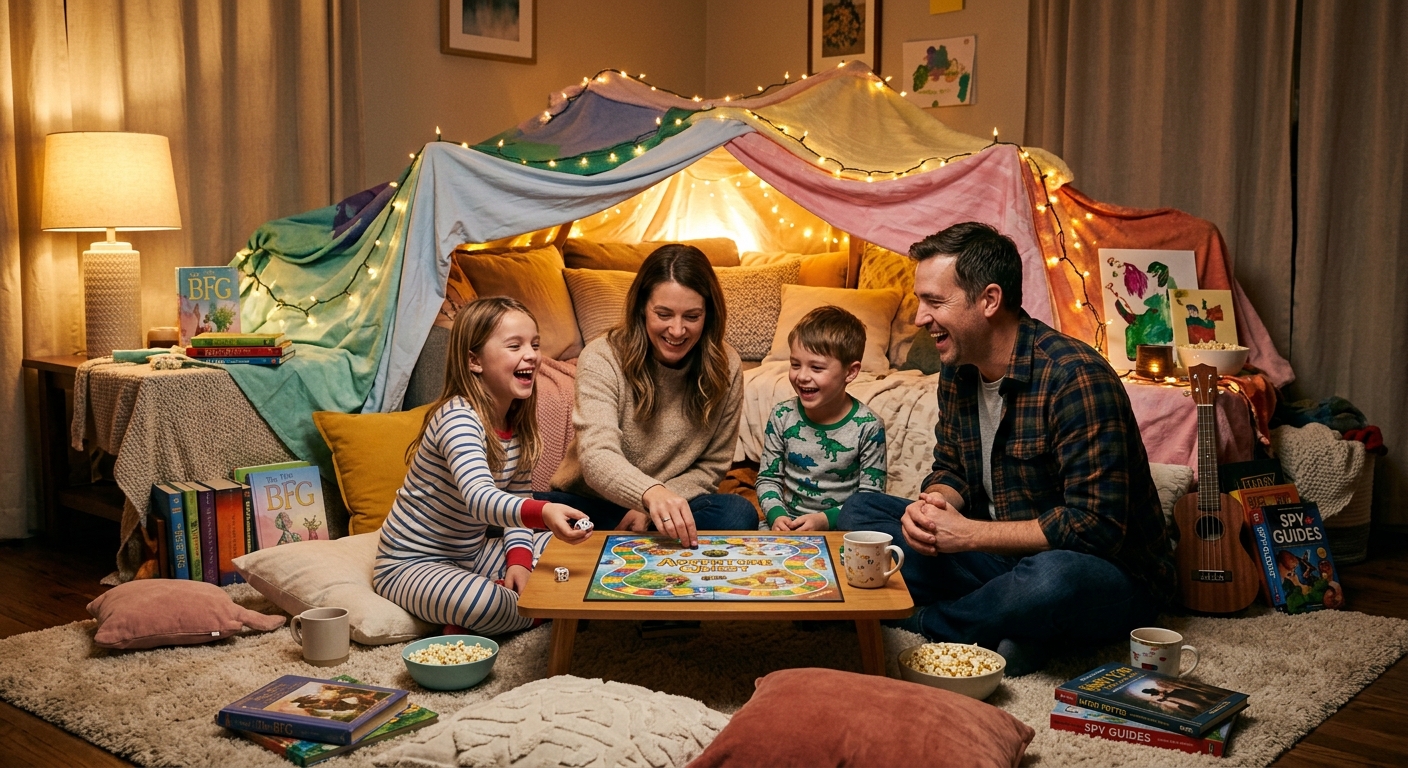
Dim the lights slightly. Put on a playlist of calm or upbeat music depending on the activity. Let kids help set up, whether that means laying out the board game or clearing the table for crafts. Make a simple snack together before you begin. These small rituals create a sense of occasion that passive screen time cannot replicate. Screens are something that happens to children. Unplugged evenings are something children participate in, and they feel that distinction even if they cannot name it.
Over time, many families find that their children start requesting the unplugged evening. Not because screens are unavailable, but because the night has become genuinely associated with fun, a good snack, and being part of something together.
When the Best Night of the Week Needs No Screen
Getting there takes a few weeks of calm consistency, the right activities for each age, and a home environment that makes offline time feel natural rather than forced. The effort is real. The return compounds.
Children who grow up with regular unplugged family evenings carry positive associations with offline connection into how they spend their own leisure time as they get older. The pattern you build now, a weekly evening of games, creativity, or simple togetherness, is one of the most understated gifts you can offer them.
Start with one night. Stock a corner. Let the kids choose something. Show up for it, week after week. The protests fade. The anticipation grows. And before long, the unplugged night becomes the one your family actually looks forward to.