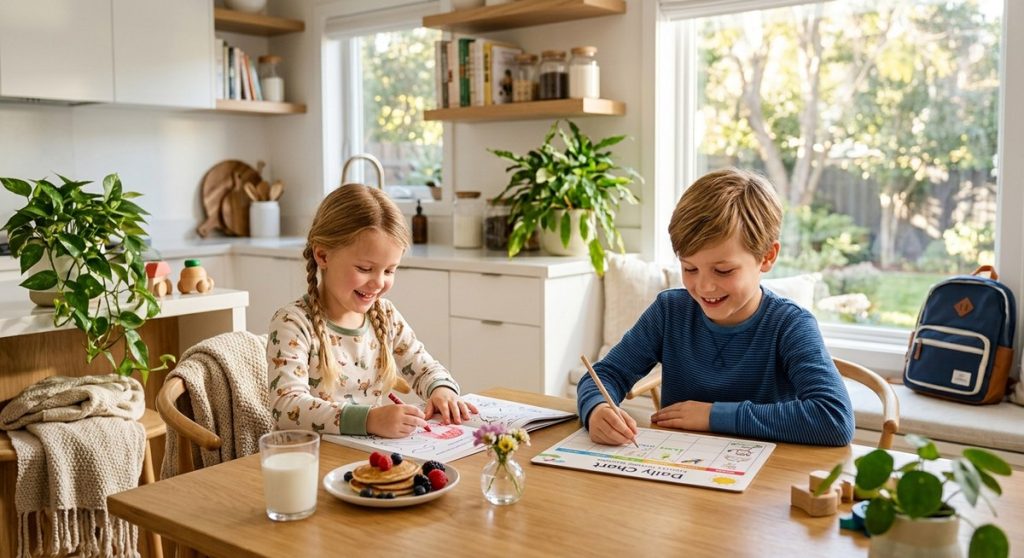
Confidence does not appear in children because they are praised once, win a prize, or behave perfectly for a week. It grows through small moments at home, the way a parent listens, the way a mistake is handled, and the way effort is noticed before results. Positive parenting gives children a steady message: you are loved, you are capable, and you can keep learning.
For parents who want practical, age-aware parenting tips, confidence building starts with everyday habits rather than complicated systems. A warm tone, clear limits, patient correction, and regular encouragement all help children feel secure enough to try, speak up, and recover from setbacks. Confident children are not children who never feel shy or uncertain. They are children who believe they can take the next step with support.
A Helpful Snapshot for Parents
Positive parenting builds confidence by combining warmth with structure. Children need encouragement, predictable boundaries, chances to solve problems, and adults who listen without rushing to judge. The goal is not to remove every frustration. It is to help children trust themselves while knowing they have a safe place to return to.
Confidence Begins With Emotional Safety
A child is more willing to try something new when home feels emotionally safe. This does not mean every moment is calm. Family life can be loud and messy. Emotional safety means children know they can have big feelings without losing connection. They can admit fear, disappointment, jealousy, or confusion without being mocked or dismissed.
Positive parenting creates that safety through active listening. A parent might say, “You were upset when your tower fell because you worked hard on it,” instead of “Stop crying, it is just blocks.” The first response helps the child name the feeling and feel understood. Over time, being heard helps children express themselves more clearly.
This also connects closely with routines. Predictable family rhythms lower stress because children know what comes next. KenziePoo has already covered how daily routines support children, and confidence often grows within that kind of steady structure. A child who knows bedtime steps, homework time, or morning responsibilities can act with more independence because the path feels familiar.
Encouragement Works Best When It Is Specific
General praise has its place, but confidence grows faster when encouragement helps children understand what they handled successfully. “Good job” may feel nice. “You kept trying even after the puzzle was frustrating” gives a child a clearer picture of their own strength. Specific encouragement becomes evidence they can use later.
Parents can look for effort, patience, kindness, creativity, and problem-solving. These are qualities children can repeat. Praising only outcomes, such as being the fastest, smartest, or neatest, can make children afraid to lose that label. Praising effort and strategy gives them room to be learners. A child who hears, “You asked for help when you needed it,” learns that confidence includes knowing when to speak up.
Try This Language During Everyday Moments
- Notice effort.
“You stayed with that even though it took longer than you expected.” - Name progress.
“Last week this felt tricky, and today you remembered the first step by yourself.” - Value courage.
“You were nervous to join the game, but you walked over and asked.” - Support repair.
“You made a mistake, then you came back and tried to fix it.” - Encourage reflection.
“What helped you finish that? Let us remember it for next time.”
The aim is not to narrate every action a child takes. The best encouragement is honest, timely, and connected to something real. It tells the child, “I see you,” not “You must impress me.”
Boundaries Help Children Feel Capable, Not Controlled
Some parents worry that positive parenting means being soft or saying yes to everything. It does not. Children need boundaries to feel secure. A boundary tells them what is expected and what happens next. Without that clarity, children may feel powerful in the moment but anxious underneath.
Healthy boundaries are calm, consistent, and explained in simple language. For example, “You may be angry, but you may not hit. You can stomp your feet or squeeze this pillow.” This kind of limit protects everyone while still accepting the feeling. The child learns that emotions are allowed, but harmful behavior needs guidance.
| Parenting Moment | Positive Parenting Response | Confidence Skill Built |
|---|---|---|
| Child refuses to share | Acknowledge feelings, then guide turn-taking | Social courage and patience |
| Child gives up quickly | Break the task into smaller steps | Persistence and problem-solving |
| Child talks back | Set a respectful speech limit and revisit later | Emotional regulation |
| Child fears trying something new | Offer support while letting the child attempt it | Independence and self-trust |
Listening Teaches Children Their Voice Matters
Active listening is one of the simplest ways to raise a confident child, but it can be hard during busy days. Parents often listen while packing lunches, checking messages, or thinking about the next task. Children notice when they only have part of our attention. They also notice when we pause, make eye contact, and respond to the meaning behind their words.
Small Wins Build a Strong Inner Voice
Children build confidence through success, but the success does not need to be big. Tying shoes, feeding a pet, packing a school bag, helping stir pancake batter, or greeting a neighbor can become proof of capability. Parents often miss these moments because they look ordinary. To a child, they can feel huge.
The trick is to give children responsibilities that are slightly challenging but still realistic. If a task is too easy, it may not build pride. If it is far beyond their ability, it may create shame. The sweet spot needs effort, guidance, and practice. That is where confidence grows.
Chores are one practical place to begin. Age-fit tasks help children see themselves as contributors, not just receivers of care. Ideas from age-appropriate chores can be adapted to each child’s temperament and stage. A cautious child may need a parent nearby at first. A more independent child may enjoy checking off a simple list.
How to Help Children Handle Mistakes
Confidence is tested most when a child gets something wrong. A child who spills milk, loses a game, or hurts a friend’s feelings needs more than quick correction. They need help separating the mistake from their identity. “You made a poor choice” leaves room to repair. “You are bad” does not.
Positive parenting treats mistakes as learning moments. This does not mean ignoring consequences. It means consequences should teach, not humiliate. If a child draws on the wall, they help clean it and are guided toward paper next time. If a child speaks rudely, they practice saying it again with respect. The message is clear: you are responsible, and you are also capable of making it right.
Everyday Habits That Raise Confident Children
Confidence grows best when it is woven into normal family life. It does not require perfect scripts or a flawless home. It requires repeated messages of trust, warmth, and guidance. Children need to hear that their ideas matter and their effort has value.
- Offer choices with limits: “Do you want the blue cup or the green cup?” gives control without chaos.
- Let children struggle safely: Pause before stepping in, especially when the task is frustrating but not harmful.
- Use calm correction: Keep your voice steady, making the lesson easier to absorb.
- Create family rituals: Bedtime chats, weekend breakfasts, or after-school walks give children steady connection.
- Celebrate effort privately too: Not every proud moment needs an audience or a photo.
Trusted child development guidance also supports age-aware expectations. The CDC’s positive parenting tips organize guidance by stage, since a toddler, preschooler, and school-age child show confidence in different ways. A toddler may dress independently. A preschooler may join group play. An older child may speak honestly about a friendship problem.
What Positive Parenting Is Not
It is also not about rescuing children from every uncomfortable feeling. Confidence weakens when children are never allowed to be disappointed, bored, nervous, or frustrated. A parent’s role is to stay close enough to support, but not close enough to block the child from finding their own strength. Sometimes the most loving sentence is, “I know this is hard, and I believe you can try one more step.”
Growing Confidence One Family Moment at a Time
Children become confident through repeated experiences of being loved, guided, heard, and trusted. Positive parenting gives those experiences a steady shape. It helps parents respond to behavior without crushing the child underneath it. It helps children see effort as valuable, mistakes as fixable, and feelings as manageable.
The real power is in the ordinary moments. A patient answer at breakfast. A clear limit before bedtime. A quiet celebration when a child tries again. A calm repair after a hard afternoon. These moments may not look dramatic, but they become the foundation of a child’s inner voice. With time, that voice begins to say, “I can learn. I can ask for help. I can handle this.” That is confidence worth building.